
sacred rituals in the midst of darkness
reflections about Día de los Muertos, on the eve of Winter Solstice
Winter Solstice has taken on new meaning for me as a PNW transplant from southern California. Around this time of year, I was used to looking around at blue skies, sun, wondering “what winter?” I envied and craved for the transition of autumn leaves, wishing snow was a possibility, grateful for and dissatisfied with the endless spring and summer.
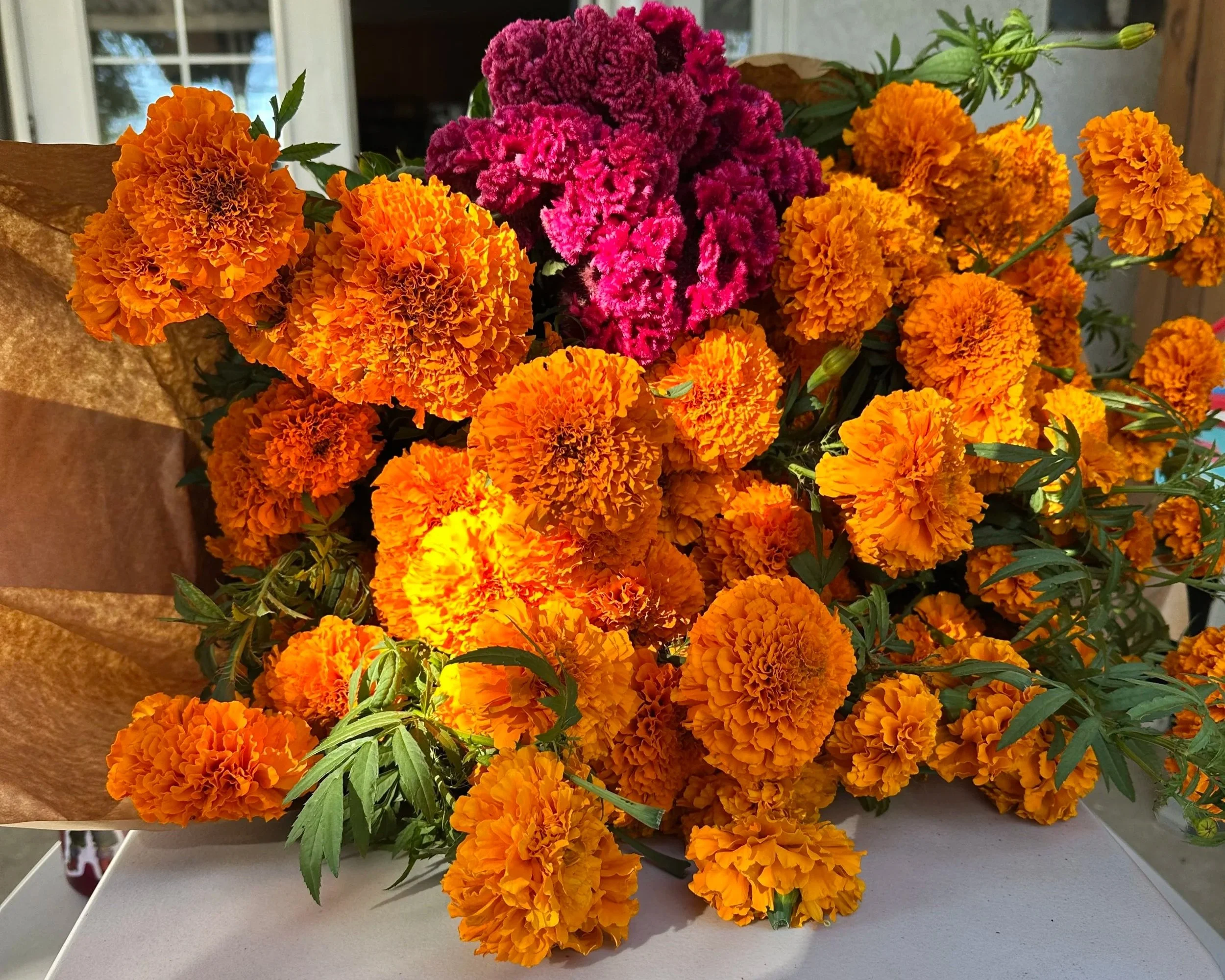
In western Washington, fall and winter are altogether different. I felt the contrast this year especially, spending Día de los Muertos week in my hometown of Santa Barbara, on ancestral Chumash lands. I spent the week flitting around, como mariposa, picking up pan de muerto, fragrant cempasúchil (marigolds) and other items for the ofrenda.
I love Día de los Muertos, love sharing the traditions and returning to the rituals year after year. And I love that plants are essential to the ofrendas–it is said that it is the aroma of the cempasúchil that guides our loved ones home. Once I picked up my bundles of marigold, I set to work, cutting the stems and preparing some flowers to be centerpieces and others to be garland. While I wasn’t home in my garden, I felt the pull to work in a familiar garden. I chose my mother-in-law’s backyard of her childhood home, tending to the flowers under blue skies.
My favorite place to prepare for Día de los Muertos is in the jardín. While the holiday falls in the middle of fall, I find meaning in preparing year-round in the jardín. In the fall and winter, I task myself with deadheading marigolds and harvesting seeds and petals for future ofrendas. In late-winter and spring I start marigold seeds, sprinkling them in garden beds and preparing small pots for seedlings. And for the rest of the growing season, the focus is on tending to the plants’ needs and growth, culminating in ofrendas built in October and November.
I felt nourished, tended to, my bones warmed by the California sun and powerfully rooted in my connections with community, with traditions. The transition back to Seattle felt harsh in comparison: the skies were dark, with no warmth to feel. The growing season was over, and it felt like daylight left with it. I have felt myself resistant to the seasonal transition this year. I miss being outside, marveling at new growth, excited by change, looking forward to what may come. Why does late fall carry such a foreboding feeling with it?
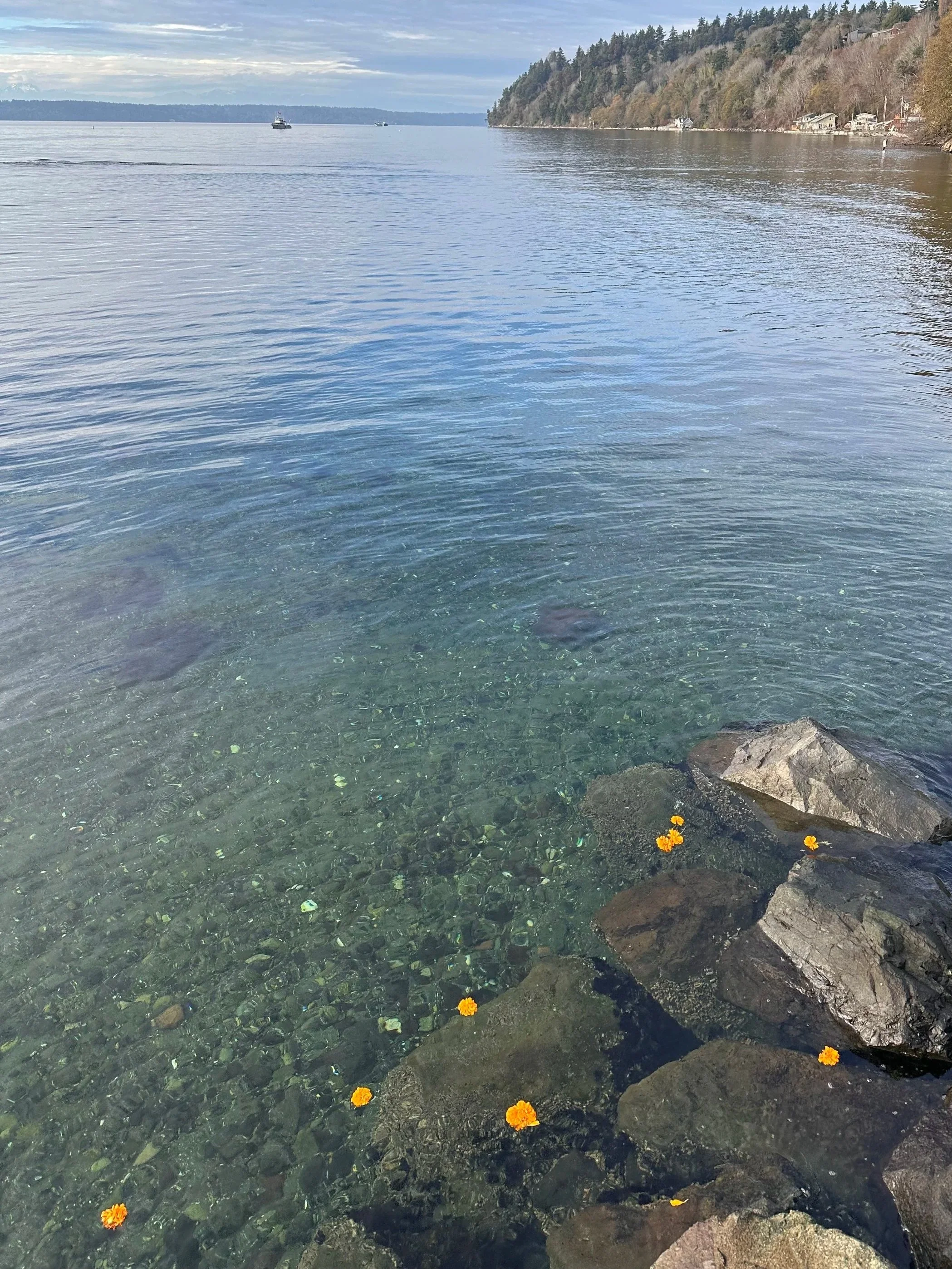
I offered some of the final marigolds from my garden to the Sound earlier in December. I was slow to cut the final blooms, missing what spring and summer cultivated. I also knew that the more firmly I white-knuckled my hold of what summer was, the less able I was to accept winter’s invitation to rest and be restored.
It can be hard to disconnect from the hustle and bustle, from urgency, and yet this time of the year beckons us to slow down. As the new year brings new hopes and new plans, the end of the year offers a natural time of reflection. What can we express gratitude for and what do we hope to part with? What changed? What was lost, and what was found? Reflections on where we have been and what we have seen enrich our journey forward.
As we look forward, and we make plans, what do we hope will sustain us? I hope that in this season of solstice, and on the eve of a new year, we accept the invitation to rest and honor the past and present moments in our lives.
Wishing care and tenderness in the midst of winter, and with hopefulness for abundant springs.