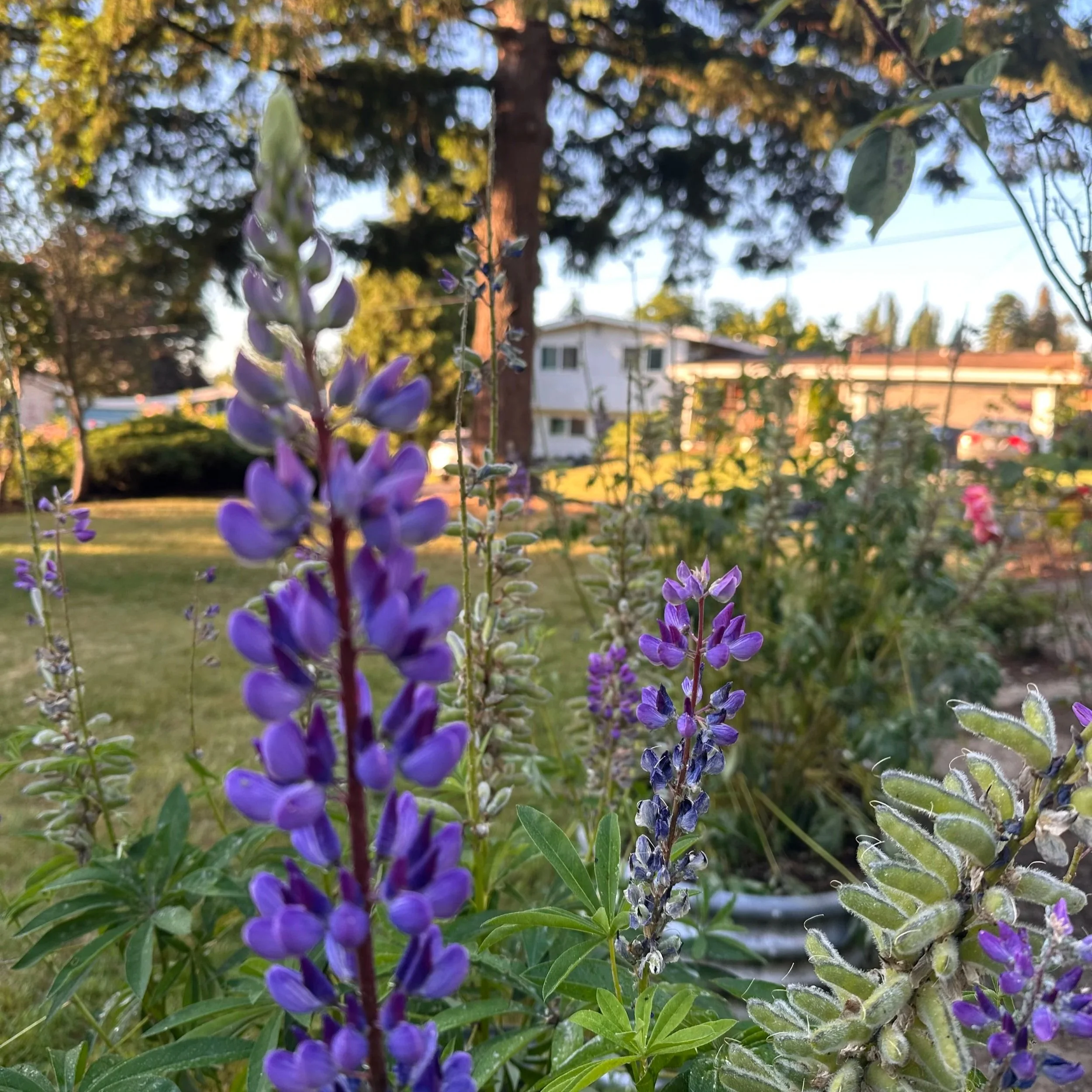
as spring turned to summer
Spring this year was a period of quiet contemplation, of taking stock in the midst of newness and change. It’s taken a while for me to metabolize experience into reflection, to know what words describe what I’ve felt.
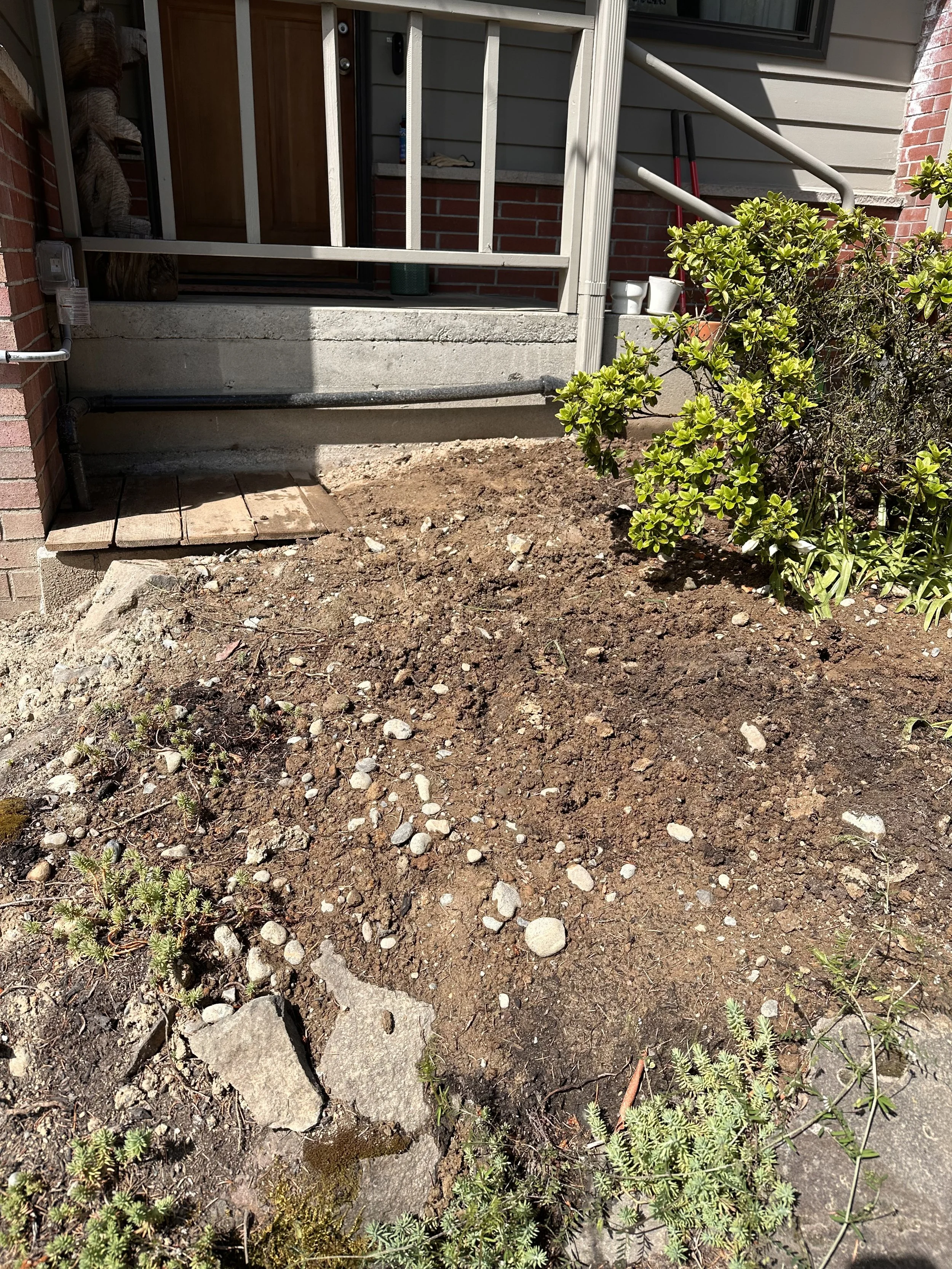
It started with a bare, unblooming, desolate patch in the garden.
I frowned every time I walked past the harsh and unforgiving patch of soil that was once a beautiful garden bed. This bed was an eyesore, and a reminder of the unexpected issues and repairs from late March. Repairs required us to relocate the Japanese aralia that offered the front door some shade and privacy, and to rip out most of the garden bed along with it. After all was said and done, the garden bed lay bare with a single struggling azalea bush.
For months, the bone-dry patch sat as a reminder of how fraught spring felt. In my experience of this year’s spring, I have wrestled with various questions: how do I welcome or embrace a spring I wasn’t ready for? A spring I didn’t want, not this way, not just yet.
As a season, spring often signifies new beginnings, new life. This newness is a beautiful opportunity, one that can carry with it expectations of what new should look like. Expectations of what newness should be are hard enough to work through, but what about when the newness is something we’re unprepared for? Something unwanted?
Part of my ire about this dry and desolate patch is that it replaced this “beautiful” garden bed. Here lies this beautiful bed, demolished and disturbed. My memory, however, of this disrupted garden bed is not entirely accurate. This is our fifth spring living in our home, our fifth year of being stewards of the house and garden we live in. This bed, like many parts of the garden, possesses beautiful features and possibilities. Much of the garden has also required work, back-breaking and tedious, to restore some of the natural function and resilience of gardens: removing plastic weed barriers and invasive species, planting native plants, adding pollinator-friendly plants, and supporting the biodiversity of the garden. There was beauty in this bed, but there was always work to do.
So this bare patch, what to do with it?
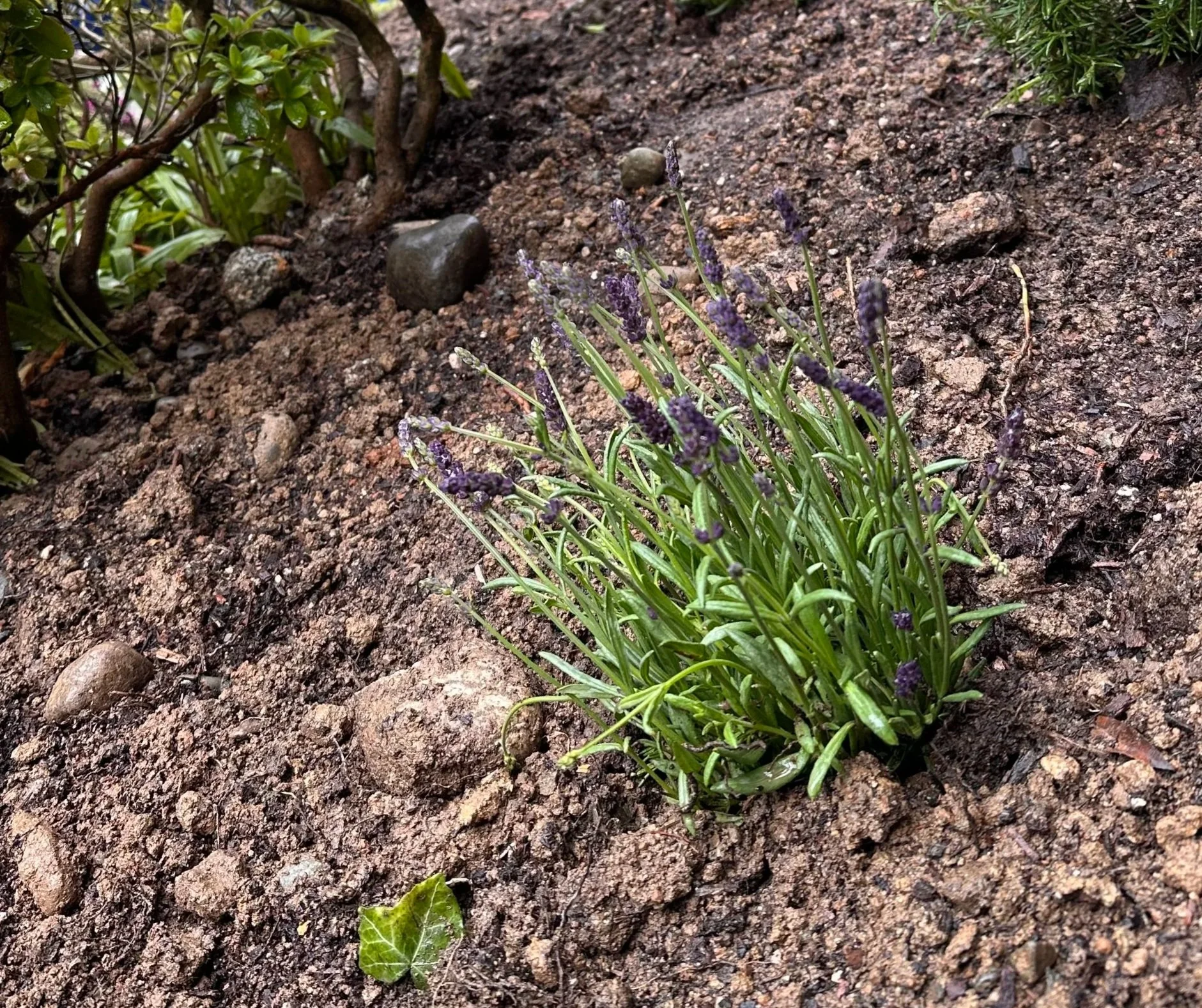
In spring, I spent hours tending to the patch.
This process required constant hoeing, digging, watering, and amending the soil as I went. Now, this bed has herbs such as lavender, rosemary, and lemon balm, as well as bright celosia. And the struggling azalea has rebounded, pushing forth new growth.
As spring gave way to summer, I turned to new patches. At times, I feel exhausted by the constant projects and needs of the garden: pruning, hoeing, raking, deadheading, pinching. Always a cycle, always more to do. Other moments, I feel grateful.
We don’t always want new starts, do we? Some like moving away to college or starting a new relationship are terrifying, thrilling starts. Other fresh starts, like after a breakup or the loss of a home, feel altogether different. Newness and endings exist in tandem, making it at times difficult to accept what new may come. And yet, all these starts have in common the opportunity of change, and the chance to embrace or welcome it.
We don’t always get to choose what newness we encounter, and we certainly don’t get to choose what emerges from those moments. We do, however, get choice in how we meet the opportunity, carrying whatever hope, pain, grief, and longing we might.
Earlier this week, I spent some time working on a new bed. This bed has not been as irritating, but the ground is still hard to work. Again, begins the new process of slowly digging and hoeing, watering to saturate the ground, amending the soil, digging and hoeing some more until, eventually, seeds can be sown and new plants can begin to take root.
The cycle begins anew.