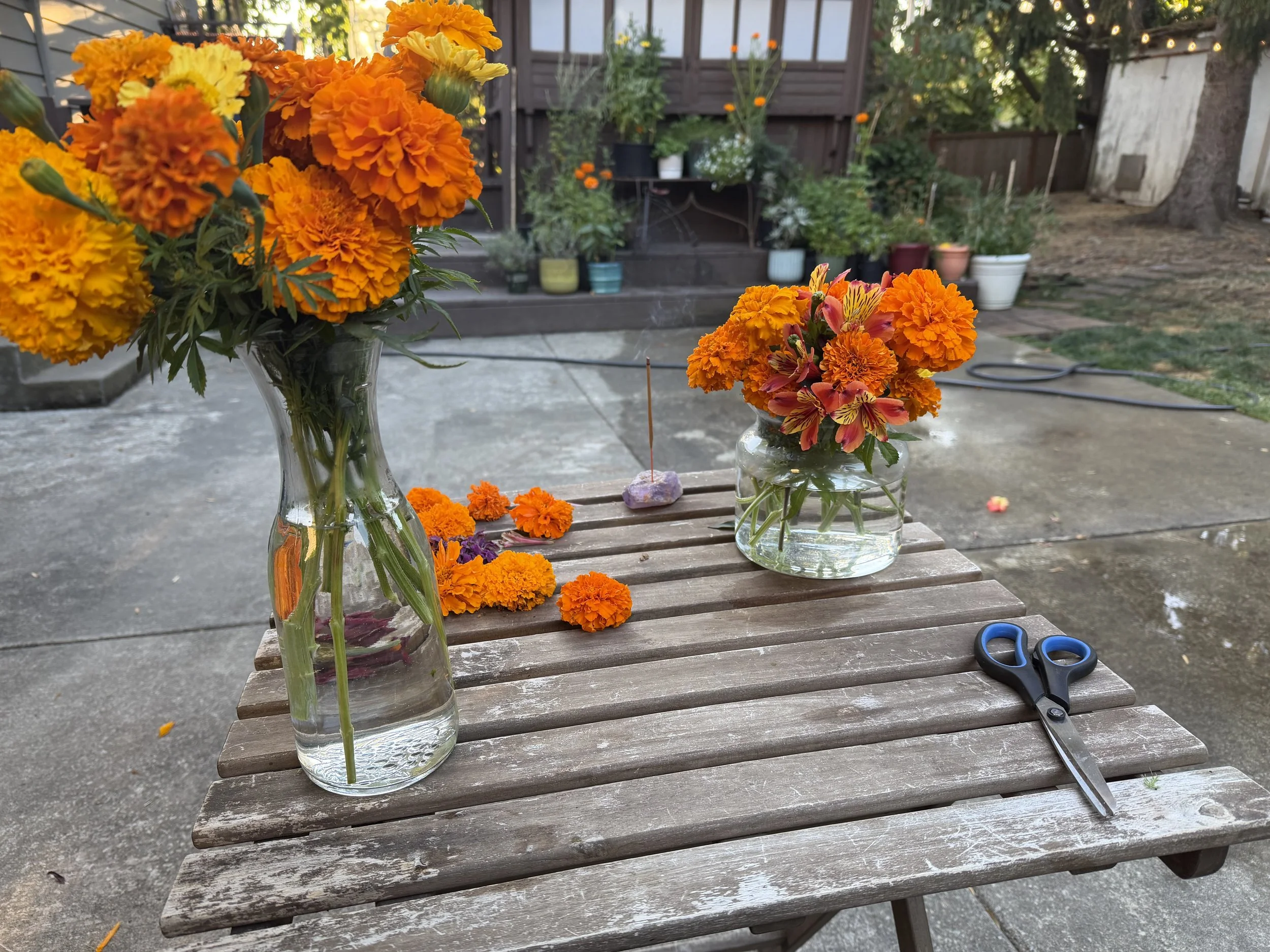
I felt impatience surging in me as I surveyed the marigold buds in the garden in early August. “Sembré las semillas en la primavera, what’s taking so long?” Should I fertilize more? Transplant? Thin? Pinch? Should I move the ones in pots to get more sun? Am I overwatering? Underwatering?
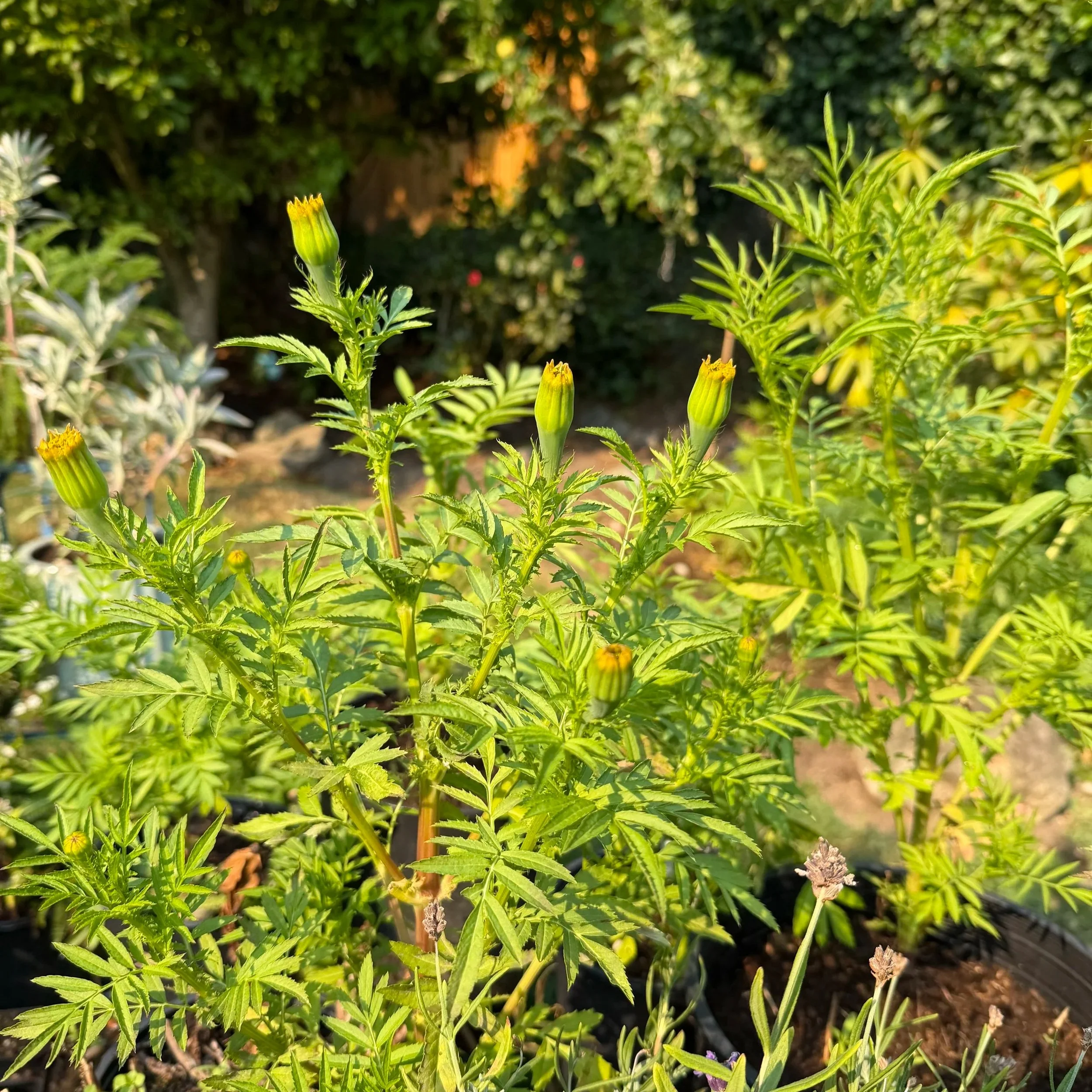
I yearn for the fragrance of cempasúchil that lingers on my skin as I walk between the flowers, the sharp herbal musk wafting in the air. I want to feel comforted by the joyful orange glow of flowers on fire. I want to feel the thrill of new petals, blooming forth, and the satisfaction of harvesting dried petals and seeds. Why is it taking so long?
This is not the only thing I have waited for lately. Grief, heartache, and change feeds the urgency of growth. The urgency to do more, to be proactive, to feel unburdened by the waves of pain that grief carries. What will I learn from this? What do I carry from this? Why is it taking so long? How will this work be something beautiful or, at the very least, bearable.
When we face loss and grief, we want to know what will come of it. We want to get to the point where we can talk about something painful, self-actualized and all the better for it. It’s uncomfortable to be in the midst of mourning, so uncomfortable we work to find some way to alleviate the pain. The lessons we can learn become the focus, and we skip honoring the depth of our loss.
This discomfort, this frustration, reveals a truth I’ve already had to contend with. I don’t know how to rest. Not when there’s more to be done, more than can be done, more to manage and influence and control. And certainly not when there is pain. Rest becomes especially hard when there’s painful reminders of plans, hopes, and dreams unrealized.
So work the soil, till the ground, nurture the earth. It’s my sensibility as a late-August baby, a child who would dig until I found the delightful wiggling worms that nourished the soil. Work with the earth–till, dig, plant, water, again. Gently. Compost, amend the soil. Fertilize. I know how to start plants from seed. I know how to protect vulnerable seedlings, and how to harvest seeds for the next season.
What I don’t know is how to rest in the bounty and harvests of summer. I don't know how to trust that I have done enough to sustain the work of seasons past. I know how to work, but I don’t know how to sit en mi jardín and read and accept that marigolds will bloom and fall will come when they are ready.
This is a difficult truth all gardeners encounter at some point: all of our work doesn’t change that there’s only so much we can control. Some plants and trees will thrive, some wilt and flounder. Fungal infections and pests are inevitable. Bees and pollinators support the garden’s growth, and their absence impacts the harvest of the year. We are at the will of climate patterns–of significant climate change, weather, and natural disasters that impact our lands.
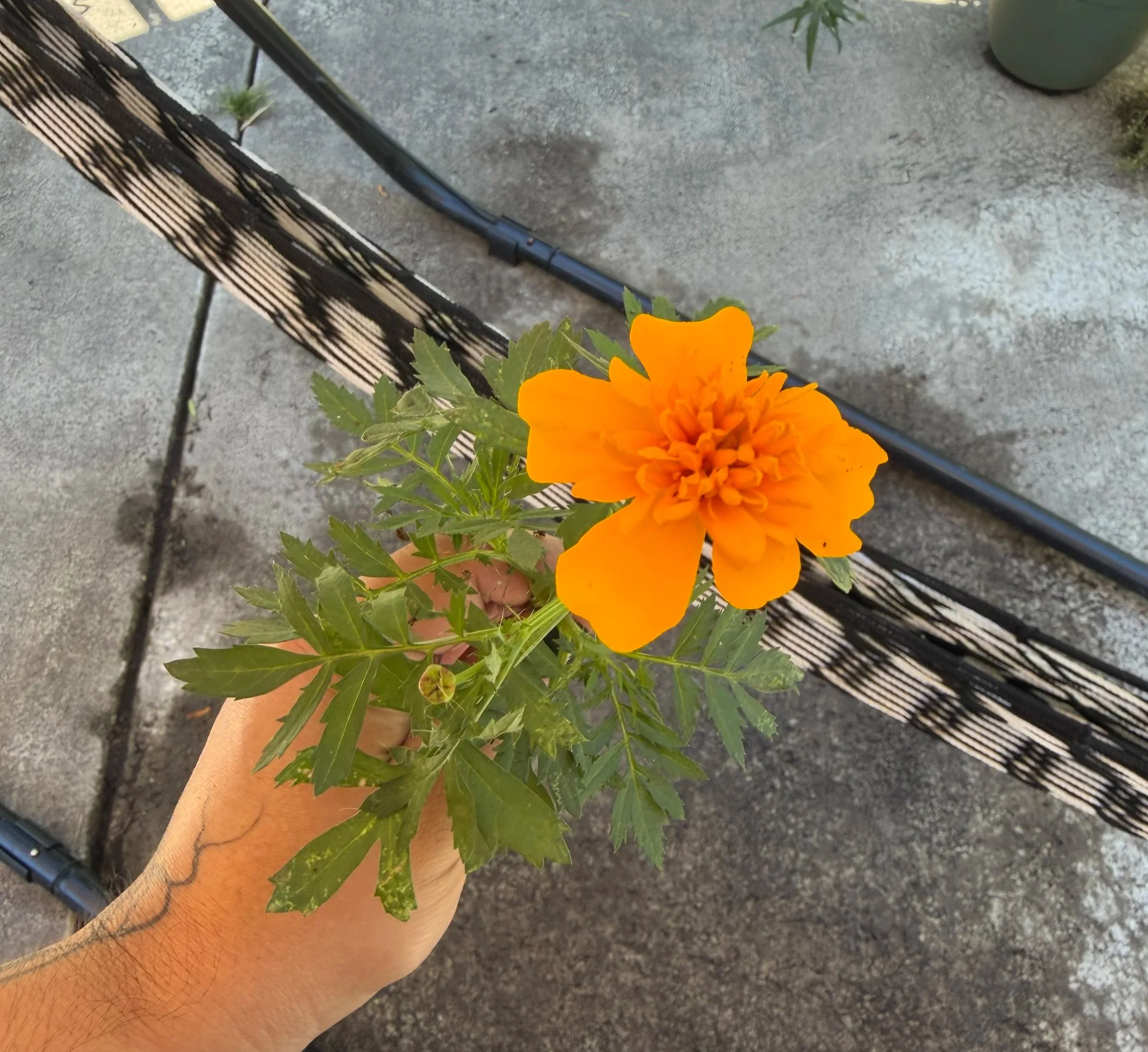
Perhaps this is why so many turn to nature when our feelings overwhelm our senses. We want wisdom and perspective to help us make sense of what hurts. But we’re often unwilling to trust the process of sitting with the pain to deepen our understanding. There are so many examples of processes that take time and that have significance, if only we allow ourselves to sit in discomfort. Felled trees in old growth forests, the annual transition of summer to fall, the process of decomposition.
More flowers are blooming than ever before in my garden, yet grief remains. Tending to the earth recently has only shown me how fatigued I am, how taxing it is for my joints when I push myself to my limits. And doing so has not alleviated discomfort.
What has alleviated the acuteness of pain has been sitting in the garden. I moved an adirondack chair to sit among the raised beds of my garden, and I read. My grief remains, but the earth held me as I rested, cradling me with the reminder that I can rest and will bloom too, if only I allow myself. While I read, marigolds bloom.
Now, in late August, I feel myself fretting over new things: how long will the blooms last? To deadhead now or later? The crispness of fall comes in the evening breeze, and the waning sunsets remind us of changes to come. Again, the urgency to do in the midst of transition, of discomfort.
In the Pacific Northwest, this particular seasonal transition is a hard one. Summer days fade, and summer sunsets with them. The sun starts to wane, and a brisk fall wind returns once again. As we look ahead to the end of summer and start of autumn, consider what you would like to invite in to help with the discomfort.
What are you bracing for? The return of cold, perhaps, or of absolute and unending darkness. Maybe the loss of warmth, or the end of the growing season. It’s true, parts of fall and winter will be harsh and unforgiving, and yet we need them for the newness of spring and summer. If only we accept that the discomfort we feel is part of larger experiences and processes of becoming, we might find new ways to offer ourselves comfort in grief.
May marigolds bloom today and in summers’ future, and may we find comfort in the transition of fall.